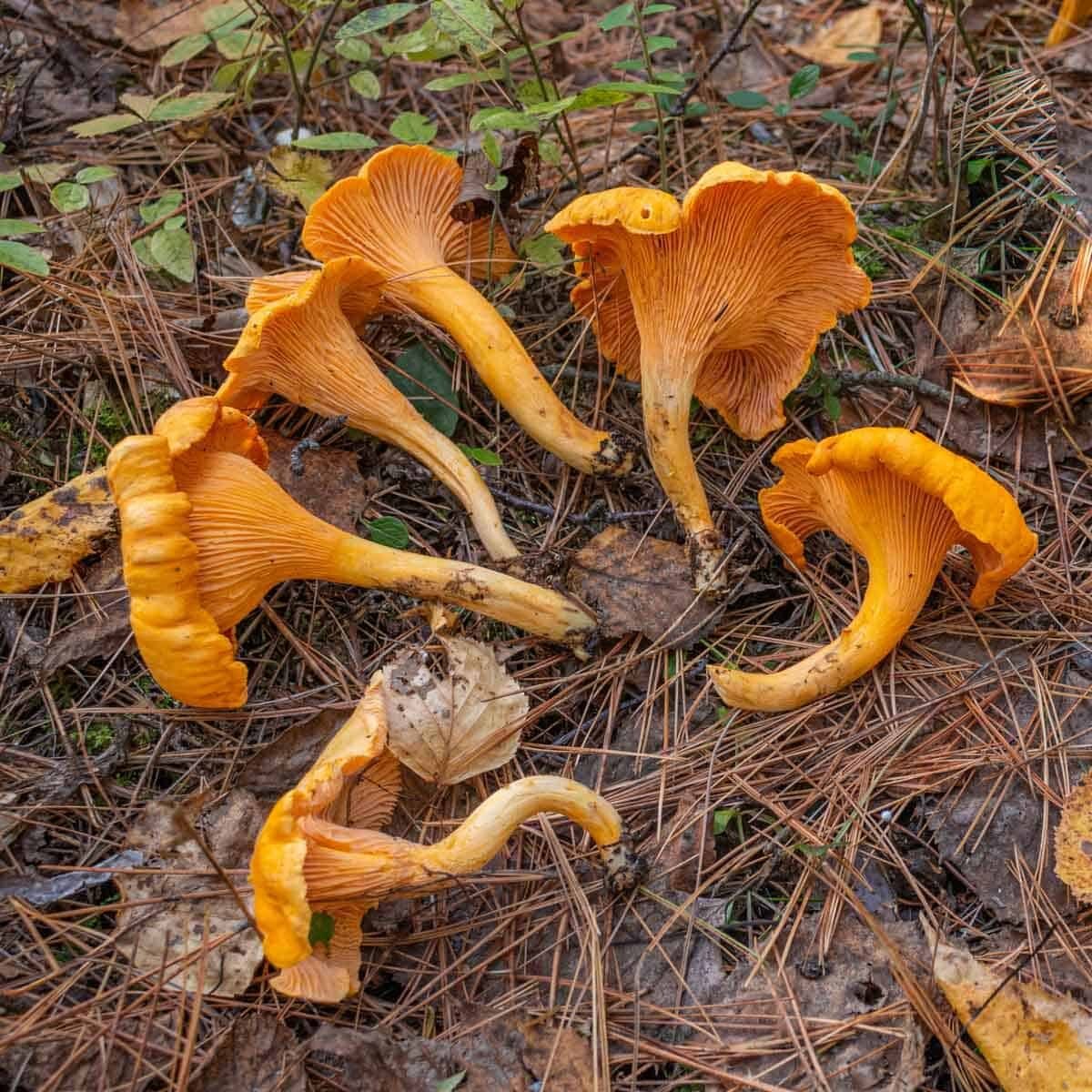
Chanterelle
Cantharellus cibarius
Best time to forage: May – September
Warnings
Understanding the structure of false gills is crucial to safely picking this mushroom. Deadly Webcaps have been consumed by inexperienced foragers who have believed these to be Chanterelles.
Key Identification Features
- Golden yellow colour
- Funnel-shaped cap
- False gills that run down the stem
- Fruity apricot smell
Description
A very tasty and highly prized common mushroom.
How to Identify Chanterelles
Cap
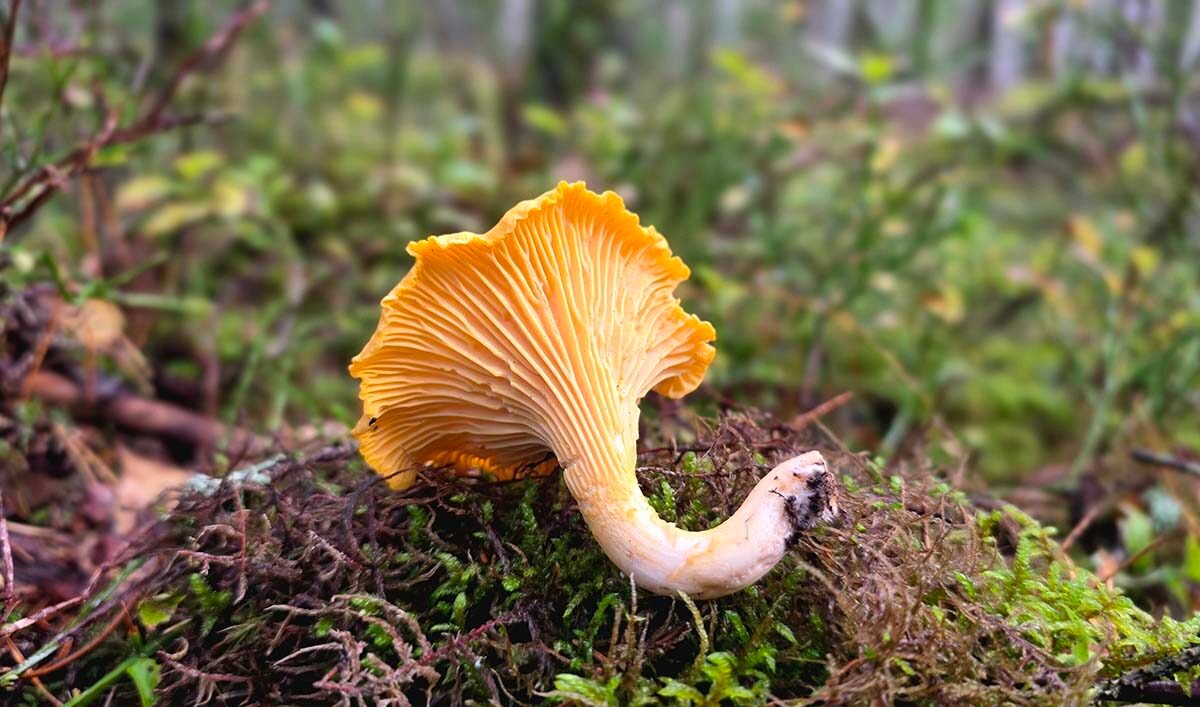
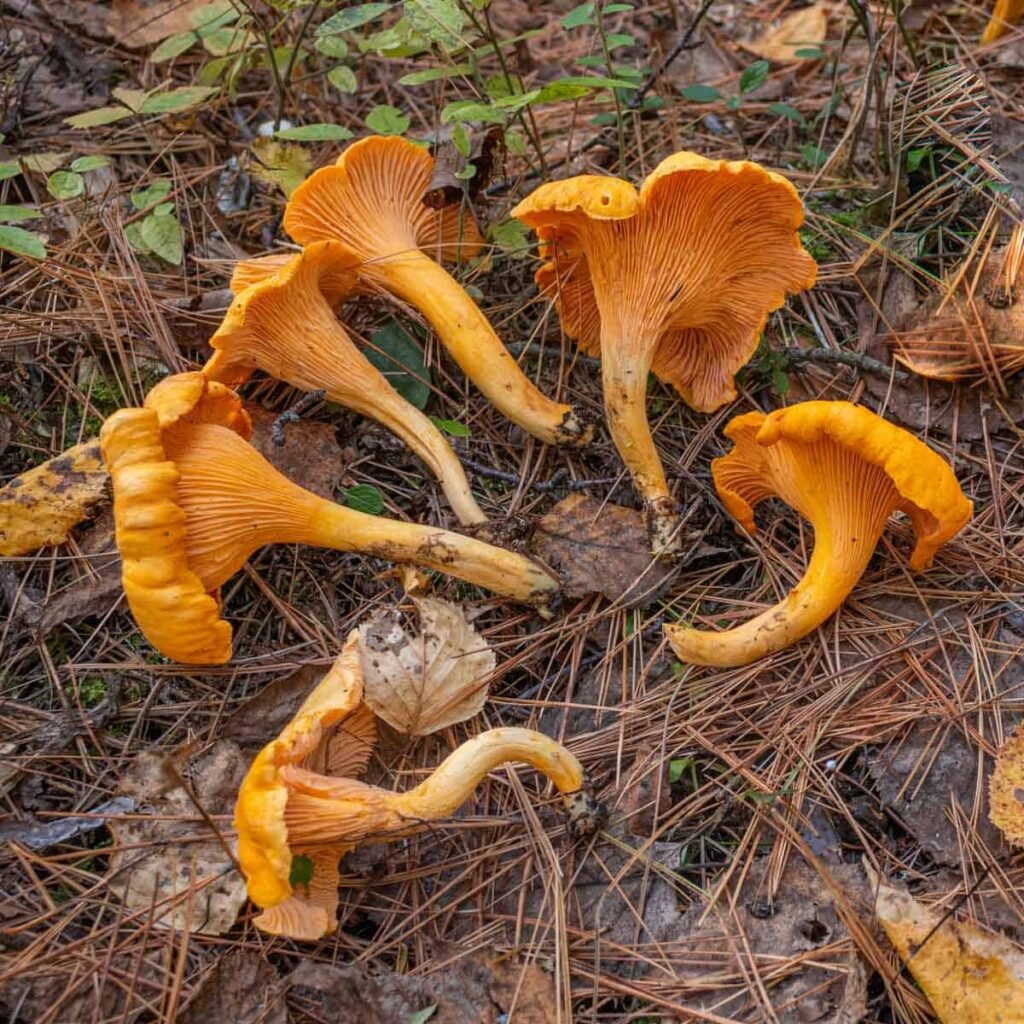
The cap of a golden chanterelle is typically egg-yolk yellow to orange with a smooth, matte texture. It begins as a convex shape but matures into a wavy, funnel-like form with irregular edges. The colour is uniform across the surface, and the flesh remains firm rather than brittle.
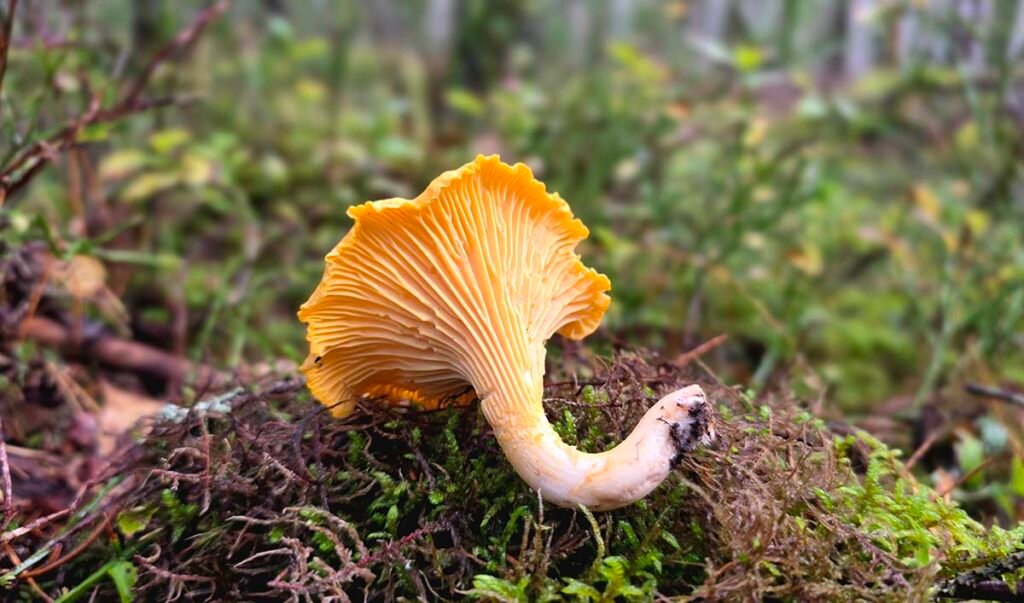
Gills
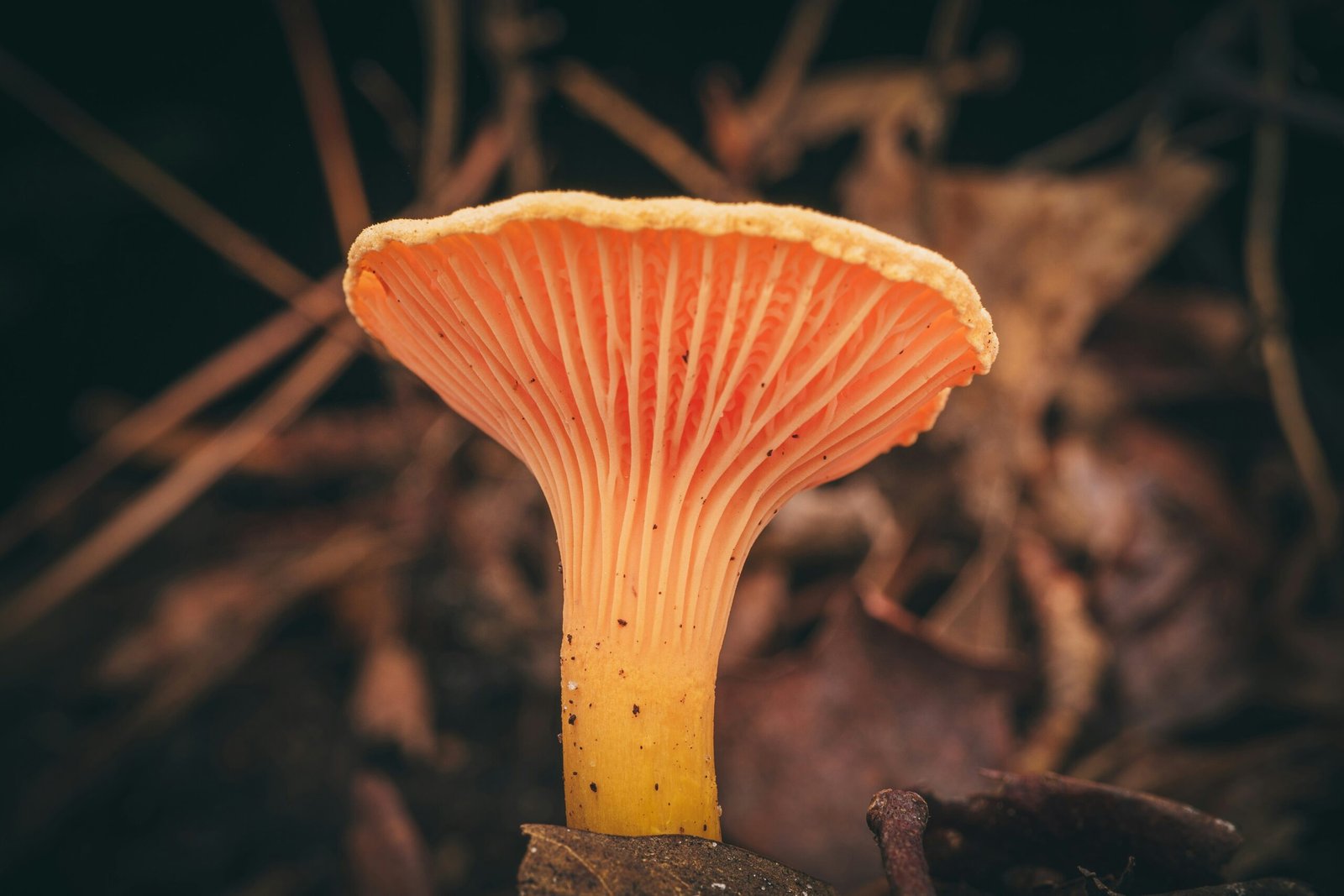
On the underside, you will find blunt, vein-like ridges rather than true gills. These ridges are thick, frequently forked, and run down the stem. Unlike true gills, these folds are part of the mushroom's body and cannot be easily rubbed off or separated from the cap.
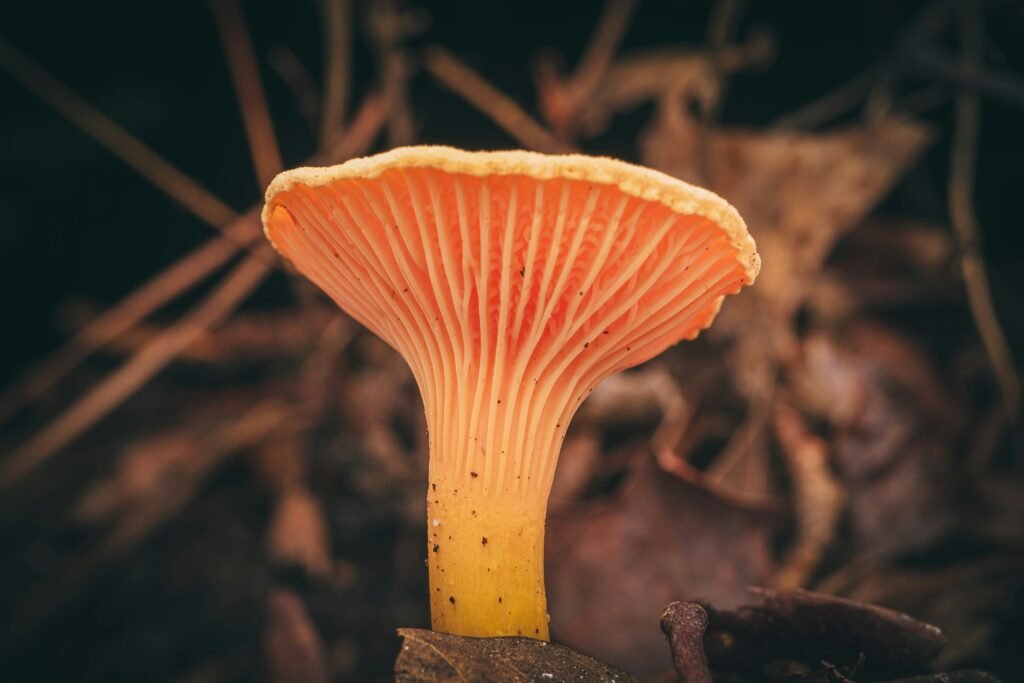
Stem
The stem is solid and never hollow, tapering slightly toward the base. When split open lengthwise, the interior flesh is stark white and peels apart in fibers, much like string cheese. The exterior color usually matches the cap or appears slightly paler.
Where to find Chanterelles
Deciduous woodland, often near Oak and Beech trees.
Edibility / Taste
Edible and delicious.
Smell
Fruity. Comparable to apricots.
Spore Print
Pale yellow or cream.
Rarity
Common.
Chanterelle Lookalikes
False Chanterelle, Jack O Lantern.